I. Video Summary
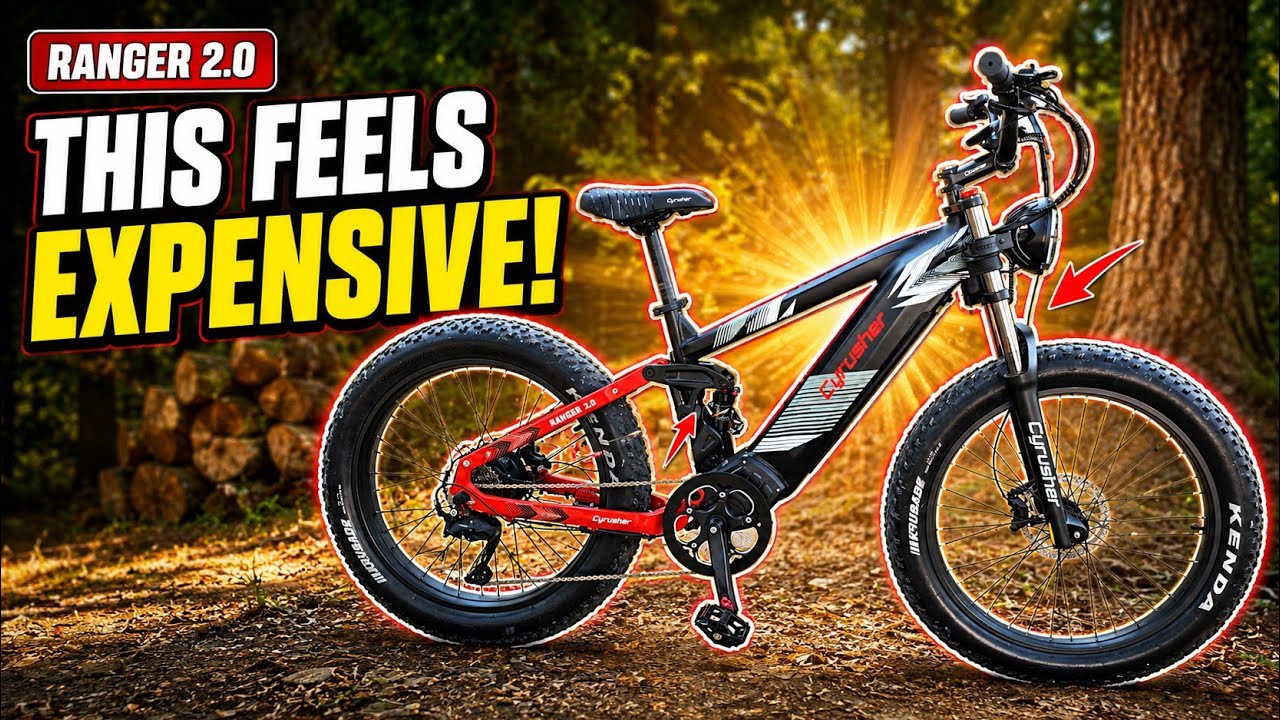
The reviewer conducted an in-depth test of the Cyrusher Ranger 2.0—a full-suspension, fat-tire electric mountain bike—through real-world riding, including camping and off-road excursions.
Although priced at approximately $2,199 (placing it above entry-level models), the reviewer considers it to offer exceptional value given its high-end specifications—such as full suspension, DNM air suspension, Shimano CUES drivetrain, Tektro 4-piston brakes, and a large 52V battery—whereas comparable models on the market typically cost upwards of $2,700–$2,800. A standout feature is the excellent performance of its torque sensor; compared to relying solely on the throttle, the pedal-assist system delivers more robust power and a superior riding experience.
II. Summary of Pros and Cons
Pros:
1.
Solid specifications and high-quality components: Features a Shimano CUES 9-speed drivetrain, DNM air rear shock, Tektro 4-piston hydraulic disc brakes (with 180mm rotors), and wide Kenda tires.
2.
Excellent torque-sensing power: The torque sensor provides a natural yet powerful pedal-assist experience; combined with pedaling effort, the bike can easily reach speeds of 31–32 mph (approx. 50 km/h).
3.
Exceptional riding comfort: The full-suspension design (dual-crown front fork and four-link rear suspension), paired with a comfortable, slightly swept-back handlebar geometry, ensures a comfortable ride even during extended off-road sessions.
4.
Comprehensive lighting and safety systems: The bike features integrated tail lights, turn signals (amber), and hazard lights, along with a high-brightness headlight.
5.
Attention to detail: The rear chainstay includes protective film to prevent chain slap from damaging the paint, and the frame comes pre-drilled with mounting points for a water bottle cage and a rear rack. Cons/Areas for Improvement:
1.
Slow acceleration using only the throttle: Relying solely on the hand throttle results in sluggish acceleration, and the top speed in throttle-only mode is capped at approximately 28 mph (approx. 45 km/h).
2.
Lack of a double-walled chain guard: The chainring lacks a double-walled guard to prevent the chain from slipping off, posing a risk of derailment during rough off-road riding.
3.
Mediocre stock grips: The handlebar grips feel average (though the reviewer notes they are easily replaceable).
4.
Limited seat post adjustment range: Rear suspension components take up frame space, resulting in a shorter seat post (though this has little impact on tall riders).
[00:00] Introduction and usage context
The reviewer introduces the Cyrusher Ranger 2.0, noting that they have tested it extensively during camping trips, off-road rides, and daily vlogging.
Highlights the bike’s positioning as a high-value, premium full-suspension electric mountain bike.
[01:49] Detailed analysis of hardware and components
[01:49] Rear drivetrain: Shimano CUES 9-speed cassette and derailleur; protective film to prevent chain slap damage to the paintwork.
[02:14] Drivetrain and rear suspension: Aluminum alloy chainring; DNM adjustable air rear shock (with damping adjustment and lockout); precision-engineered four-bar linkage mechanism with no play.
[03:14] Frame versatility and seat: Supports a rear rack and includes water bottle cage mounts; breathable memory foam seat; discussion of seat post height limits and suitability for larger riders (6’4" / 270 lbs).
[04:18] Front suspension and lighting: Dual-crown front suspension fork (with preload and lockout adjustments); high-brightness headlight. [04:51] Brakes, Motor, and Battery: Tektro 4-piston hydraulic brakes (180mm rotors), Bafang 750W rear hub motor, and a UL-certified, removable 52V 20Ah (1040Wh) battery.
[06:02] Lighting and Signal System Test: Showcasing the frame-integrated tail light, left/right turn signals, brake light, and hazard warning lights.
[06:40] Cockpit (Display and Handlebar Controls):
Analyzing the ergonomic handlebar design; testing the color display, turn signal buttons, horn volume, Shimano 9-speed shifter, half-twist throttle, and walk mode.
[08:41] Road Test: Pedal-only mode and throttle testing across different levels.
[08:41] Zero-Assist Test: Pedaling remains relatively easy even without battery power (comfortably reaching 7–8 mph).
[10:06] Throttle-only Acceleration and Speed Test: Testing throttle performance across PAS levels 1–5; speed increases progressively (approx. 13 mph at PAS 1, reaching 28 mph at PAS 5), noting that throttle-only acceleration is relatively smooth and gradual.
[12:18] Road Test: Torque sensor and Pedal Assist (PAS) experience.
[12:18] Top Speed with Pedal Assist: With pedaling engaged, the torque sensor delivers powerful bursts of energy, easily reaching a top speed of 31–32 mph.
[13:44] Riding Experience Summary: The suspension system is very comfortable; using pedal assist is highly recommended. Ideal for riders who want a balance between physical exercise and powerful motor assistance.
[14:46] Summary of Braking Performance, Range, and Value.
[14:46] Braking Test: 20 mph emergency stop test; the Tektro 4-piston brakes deliver excellent stopping power. [15:42] Range expectations: The official rating is 60–80 miles, though actual range depends on riding habits; performance is better with a higher level of pedal assistance.
[16:39] Price and final verdict: Considering the specifications and the $2,199 price tag, this bike is highly competitive within its price range.